
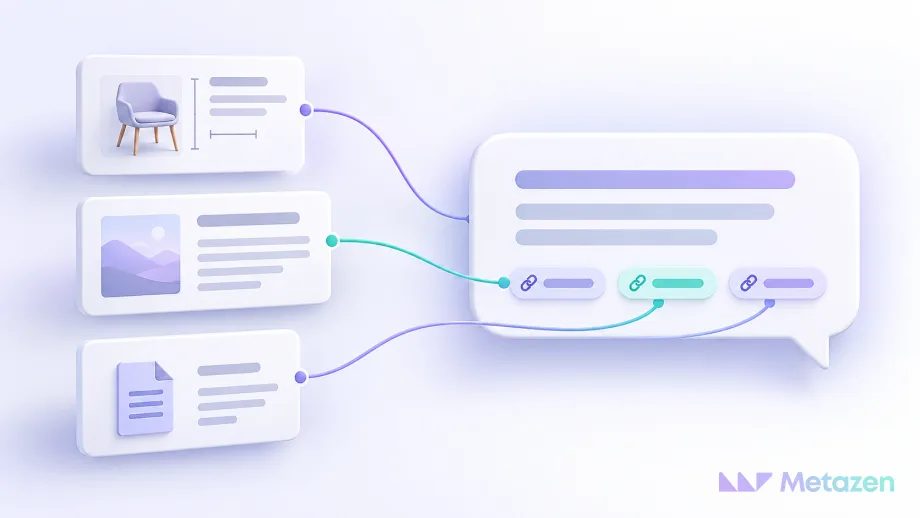
Your customer asks, “Which printer suits a small office?” Instead of a list of links, they may see an answer comparing information from several sources. For your business, discovery raises further questions: Are the product details accurate, and which page supports the answer? GEO and AEO are two terms used to describe the relationship between search visibility and answers.
What Is Generative Engine Optimization?
GEO stands for Generative Engine Optimization. It concerns the visibility of content as a source in generative AI answers. The GEO research paper examines the concept in systems that combine sources to produce a response.
In a printer comparison, an accurate explanation of your product’s connection options is more useful than a brand name dropped into a list without a reason. Readers need to understand why a product fits and where they can check the details. The answer system decides whether to select the page.
What Is Answer Engine Optimization?
AEO stands for Answer Engine Optimization. It focuses on making the answer to a question clear. Adobe’s comparison of AEO and GEO distinguishes direct answers from source visibility in generative responses, while recognizing that the approaches can overlap.
For “What is automatic duplex printing?”, a short definition can lead into whether a particular model supports it. Google’s featured snippets are an example of direct answer presentation. However, Google selects featured snippets; adding an answer box to a page does not secure that placement.
How SEO, AEO and GEO Relate
SEO helps search engines understand content and people find relevant pages. Our introduction to SEO explains the main areas of work. The comparison below offers three ways to assess the same page, rather than treating the terms as disconnected packages.
| Approach | Focus | Printer Example |
|---|---|---|
| SEO | Relevant search discovery and understanding | Someone looking for a small-office printer finds the product page |
| AEO | A clear answer to a question | The page answers “Does it print on both sides?” |
| GEO | Source visibility in a generative answer | A comparison uses product information with a source link |
A product page can appear in search results, answer a direct question and support a broader comparison. Dividing the work solely by platform name misses that overlap: one platform may offer several answer formats.
Google does not require a separate “AI schema.” Its guidance says established SEO practices apply to AI Overviews and AI Mode, without additional special markup. Google’s AI features guidance should not be treated as the rules for every provider.
How Answers Use Web Sources
Generative systems that use web sources can combine relevant information from several pages. Microsoft’s content guidance discusses the clarity and context of individual passages. A short answer can help, while the supporting detail needs to remain accessible.
“Supports up to five users” is incomplete if the reader cannot tell which software plan it describes. The plan name, condition and any exception should be understandable together. We treat a quick answer as a summary consistent with the rest of the article; we do not assume every system reads only that box. For a practical way to review the wording and its evidence, use the editorial checks for content that can support AI answers.
3 Business Use Cases
The following situations are hypothetical illustrations of the approach, not reported customer outcomes or promises of visibility.
1. Explain the Criteria for a Product Comparison
Consider an office furniture retailer. Someone searching for a monitor arm for a narrow desk needs more than a claim about stylish design. Desk thickness, mounting method, weight capacity and compatible screen sizes determine whether the arm fits.
A product page with clear measurements can support a useful comparison. If the desk edge cannot take a clamp, the page should explain whether another mounting option is available. Helpful information does not make every product suitable for everyone; it explains when the product will not fit.
2. Clarify the Scope of a Service
“Does a business website service include uploading content?” cannot be answered with design examples alone. The service page needs to distinguish writing new content, transferring existing copy and making updates after delivery.
Accurate terms help readers compare proposals more confidently. If an answer system selects the page, clear conditions may support an accurate explanation. Claiming an extra service for visibility when it is absent from the agreement undermines trust.
3. State the Conditions for Setup and Maintenance
Take the question, “Can I connect my booking software to my existing calendar?” Saying “Yes, it has an integration” leaves gaps unless the supported calendar, required subscription and direction of synchronization are clear.
An up-to-date help page can explain which connection is supported and when it will not work. A short answer helps with the decision; detailed setup instructions help complete the task. When a product changes, correcting old help content takes priority over adding new promotional copy.
Are Brand Mentions, Citations and Visits the Same?
A mention names the brand, a citation links to a page as a source, and a visit brings someone to the website. They may be connected, but they describe different events.
Bing’s AI Performance explanation states that citation counts do not indicate a source’s rank or position within an answer. A visible link alone does not establish that someone clicked or made a purchase. For a repeatable record, use an AI visibility measurement plan that keeps the question set, platform and observation dates explicit.
A citation is not necessarily a recommendation. Your page might be used to explain a limitation. Assess the information and context in which the brand appears, rather than counting names alone.
Our Approach at Metazen
At Metazen, we start with whether a product or service page resolves a real question. We bring software and digital marketing experience to checking that technical details, editorial claims and the business’s actual offer agree. Making an inaccurately described feature more visible is not a useful outcome.
Meet the Metazen team and explore our GEO and AEO service to see how we can assess technical access, content clarity and visibility in answer systems together.

