
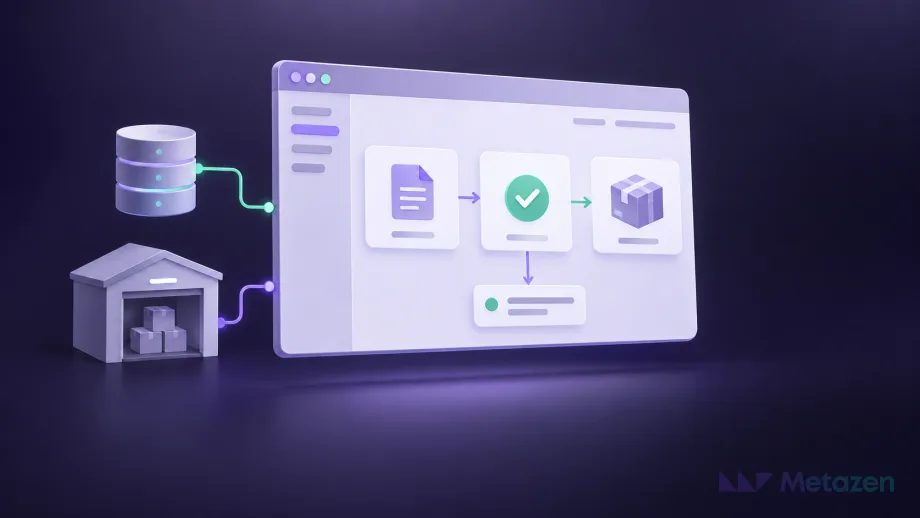
If you record orders in an existing program but track production approvals through messages and separate files, custom software may come to mind. First identify the gap: an unused setting, a missing connection between systems, or a business rule the product cannot handle? The answer changes whether you need to adapt what you have or develop a new application.
What Does Custom Software Mean?
Custom software is an application built around the needs of a particular business or group of users. IBM’s software development explanation distinguishes specific requirements from the broader needs addressed by commercial off-the-shelf products.
For example, a manufacturer of made-to-measure products might require a technical approval before an order reaches production. Who can see the order, when they can approve it and how changes are tracked form part of the application’s business rules. Adding a company logo to a screen does not establish that working process.
Custom development can use existing components or application-building platforms. Microsoft’s canvas apps, for example, support interfaces and data flows tailored to a business. The platform’s technical limits and licensing still need consideration.
Ready-Made Products, Adaptation and Custom Development
A ready-made product provides functions that have already been developed. Changing fields, roles or reports through supported settings is a form of adaptation. Developing a missing function or connection can introduce a custom component alongside the existing product.
Ready-made products are not necessarily fixed, and custom applications are not endlessly changeable. A proposed change needs to be supported, tested and maintained through later updates. GOV.UK’s guidance on off-the-shelf products, written for public services, considers user needs and adaptation. For a business, a useful lesson is to test a product’s features against everyday work.
A missing connection may not justify replacing the whole system. If the order application works but approved records are copied into accounting manually, investigate its transfer options first. Custom development might be limited to the connection between them.
4 Criteria for Comparing Ready-Made and Custom Software
1. Fit with the Workflow
Try completing a task instead of relying on a feature name. “Includes approvals” does not tell you when an order will reach the technical reviewer. Entering a sample order and trying corrections, approval and cancellation reveals more about the fit.
A ready-made product may be sufficient if it supports the required steps. If an essential business rule cannot fit the available structure, adaptation or custom development becomes worth investigating. Understand why the current process exists before reproducing it; a long-standing habit is not automatically a requirement.
2. Data and Integration
Integration connects separate systems so they can work together. An API is an interface through which software can communicate using defined rules. AWS’s API explanation describes that communication between applications.
“We have an API” leaves practical questions unanswered. Can it read the order fields you need, update the relevant status and provide access under suitable conditions? Microsoft’s custom connector documentation shows how a connection can be added around an existing API when a prebuilt connector is unavailable.
In the order example, different identifiers in two systems could make it difficult to match the records. Deciding where data belongs and which record takes precedence is separate from designing the screen. Export options deserve attention if the business may need to move to another system later.
3. Total Cost and Time to Use
The initial quote or monthly subscription does not show the entire cost. Setup, migration, training, connections and continuing maintenance belong in the comparison. Microsoft’s cost model guidance includes personnel, maintenance and support alongside infrastructure and licences.
A ready-made product may offer a shorter start when the required functions already exist; data preparation or adaptation can change the schedule. Custom development needs time to implement and test the business rules. A usable release depends on completed, tested work rather than the number of screens drawn. A firm price or delivery date requires a clearer scope than a project name.
4. Maintenance and Development Responsibilities
Who changes the application when an approval rule changes? Who checks the connection after an external service is updated? Who responds when users encounter a problem? Both ready-made and custom options need clear responsibilities.
Microsoft’s application lifecycle overview covers testing, operations and maintenance as well as development. For a ready-made product, distinguish the supplier’s support from the business’s own tasks. For a custom application, plan continuing support, technical documentation and the ability of another team to maintain it. Access to source code alone does not perform that maintenance. Our explanation of using SaaS versus providing a software service separates those roles for subscription applications.
Ask the same question of every option: “Who will make changes when our business rule changes, and what work is covered?” The answer helps expose responsibilities that may be unclear at the point of purchase.
How Do the Options Differ in an Order Process?
In the fictional manufacturer’s workflow, sales enters an order, a technical reviewer approves its dimensions and the accepted order reaches production. The location of the problem changes the possible response:
| Observed situation | Option to consider | Question to verify first |
|---|---|---|
| Approval exists but has not been configured. | Configure the ready-made product. | Does it support the required roles and conditions? |
| Approval works, but records are copied manually. | Connect the existing systems. | Are the necessary data and operations accessible? |
| The product cannot support an essential rule. | Develop a custom module or application. | Are the rule, limits and maintenance responsibility clear? |
The business may keep its accounting product while developing a custom order screen. Trying the real order workflow in the available products helps establish which option fits; replacing every tool at once is not a prerequisite.
An application accessed through a browser can share technologies with a website. Presenting services to visitors and running internal order rules are different jobs. Our introduction to web design explains how appearance and use are planned. Business rules determine which operations the application can perform and under what conditions.
Where Should the Decision Start?
Choose one everyday task and describe who takes part, what information they use and where the difficulty occurs. That example can help establish whether the current product, a small adaptation or a custom application could meet the need. GOV.UK’s technology selection guidance recommends understanding existing systems and testing assumptions through prototypes. An early decision can leave room for later changes.
If you can describe the business rule but are unsure what application it needs, Metazen’s software team can review your current tools and data flow with you. In our custom software service, we define the scope of a first working release and include data migration and maintenance responsibilities in the project plan.

