
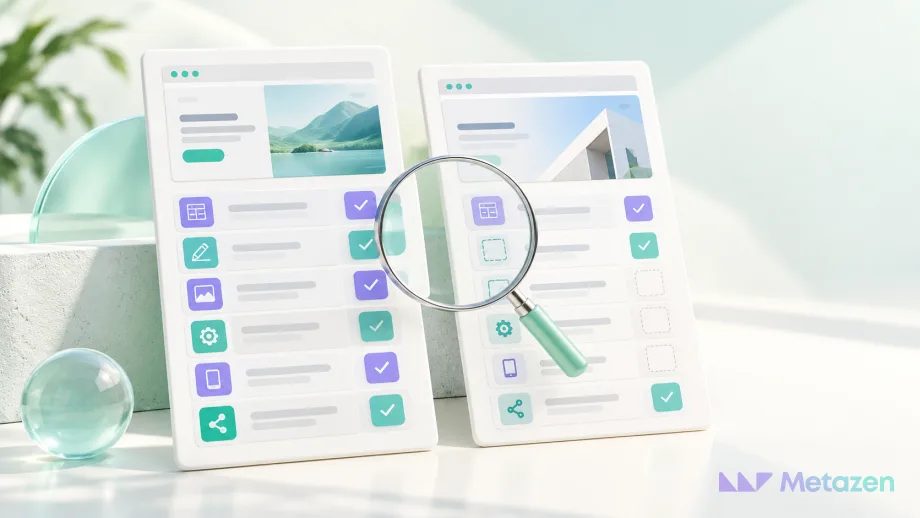
Two quotes for the same number of website pages may describe very different jobs. One supplier might place finished copy into a template. Another might edit the content, design several page layouts and provide support after launch. Before comparing totals, put the deliverables into matching rows so you can see what each price buys.
Website design costs depend partly on the kind of project you need: a business information site, an online store or an application with custom workflows. Our explanation of what web design involves separates appearance, usability and development. The comparison here focuses on quotes for a business website.
Why Page Count Does Not Explain the Price
Eight service pages built from one layout are not the same job as eight individually designed screens. Ask about page types as well as URLs. A service detail page, team profile, project example and contact form may each need different content and behavior.
Content creates work too. Are the copy, photographs and translations ready? Who will edit them and add them to the site? MDN’s website planning guidance starts with purpose, content and appearance before code. Answering similar questions in a request for a quote helps suppliers work from the same assumptions.
7 Things to Compare in a Website Design Quote
1. Design Method and Customization Limits
A ready-made theme, an interface assembled from existing components and a design created for the project have different starting points. A suitable template can save unnecessary design work. Parts that do not fit your brand, content or user tasks still need adapting.
Ask what “custom design” means in the proposal. Which screens will be designed? How will mobile layouts be handled? What will you review before development begins? Using a template does not automatically mean poor quality, and starting from scratch does not automatically create a good user experience.
2. Page Types, Content and Languages
If a quote simply says “10 pages,” clarify whether it includes writing, editing, image preparation and content entry. Building pages in a second language is separate from translating the copy. A language switcher is not evidence that translation is included.
If you are unsure what is ready, begin with a page and content inventory. Instead of asking a supplier to “add our services,” identify who will prepare the text and images for each service.
3. Forms and Connections to Other Systems
A contact form that sends an email differs from one that adds an inquiry to your sales system. List file uploads, bookings, payments, memberships or stock connections as separate workflows when they are needed. An integration lets systems exchange data; adding a button may be only a small part of that work.
Discuss failures as well as successful submissions. Who notices when a transfer fails? What record is kept? Who pays any external service charges? WordPress’s plugin guidance distinguishes free plugins from paid premium options. Ask suppliers to identify the licenses and service fees their proposed solution needs.
4. SEO, Performance and Usability Checks
“SEO-friendly” and “mobile-friendly” are not deliverable lists. Specify work such as editable titles and descriptions, redirects, form error messages, keyboard checks and testing at agreed screen sizes. If a speed target is proposed, define the page and test conditions. Field data and lab tests answer different performance questions.
W3C’s initial accessibility checks do not replace a comprehensive assessment. Technical SEO setup is likewise separate from ongoing content work or a search-ranking promise. Google’s starter guide makes clear that there is no secret method that automatically ranks a site first.
5. Revisions, Approvals and Acceptance
Ask for examples of what a revision includes. Changing copy and colors in an approved layout is a different request from adding a new booking workflow. The proposal should explain design approvals, revision rounds and how out-of-scope requests will be priced.
- How will the schedule change if copy or images arrive late?
- Whose approval is needed at each stage?
- Which tasks must work before the site is accepted?
For example, displaying a success message on a form is not the same acceptance condition as delivering its notification to the agreed destination. Describe the outcome you expect.
6. Accounts, Access and Handover Files
Find out who will manage the domain, hosting, admin dashboard and external service accounts. List the access, content, files and basic operating guidance you will receive at handover. Third-party license conditions should be distinguished from the agreed terms for work created specifically for your project.
ICANN’s information for domain registrants explains registration management and renewal information rights. If another person manages the domain through their account, clarify communication and transfer arrangements. Do not assume that every domain extension or software license follows identical conditions.
7. Hosting, Maintenance and Post-Launch Support
Separate the hosting that runs the site from the support provided by people who investigate problems. WordPress’s hosting documentation notes that some packages offer extras such as backups and updates. Confirm the tasks and service period rather than inferring them from a package name.
Updates, backups, restoration, fault investigation and content changes are separate maintenance questions. For a typical WordPress site, both the files and database are needed for a full restoration. Alongside “backups included,” ask about access to the copies and responsibility for restoring them.
A defect-fixing period is not the same as ongoing maintenance. Separate the post-launch support period, the problems it covers and the treatment of new requests in the proposal.
How to Put Two Quotes on Equal Terms
Imagine a business requesting an eight-page website. The proposals below are illustrative. They are not real client quotes, market prices or Metazen packages. They show how different deliverables can sit behind the same page count.
| Item | Quote A | Quote B |
|---|---|---|
| Design | Ready-made theme with two page layouts | Three layouts designed for the project |
| Content | Entry of finished copy supplied by the business | Editing and entry of supplied copy |
| Languages | Eight pages in one language | Eight pages and supplied versions in a second language; translation excluded |
| Revisions | One consolidated revision round | Two consolidated revision rounds |
| Hosting | Outside the quoted scope | First 12 months included; renewal separate |
| Defect Support | 30 days after launch | 90 days after launch |
More work in Quote B does not mean the business needs all of it. If one language is sufficient, remove the second-language delivery from the comparison. Finished copy may not need an editing service. Ask both suppliers for an updated quote against the same required scope. The price difference will then be easier to interpret.
What Will the Website Cost in Its First Year?
Add only the costs missing from the project fee: content and image preparation, domain registration, hosting, paid licenses, agreed maintenance and additional work. If first-year hosting is already included, adding it again will distort the comparison.
For recurring items, record the renewal date, next-period terms, currency and whether tax is included. Compare monthly and annual charges over the same period. If quotes use different currencies, record the exchange rate and date used in your comparison; changing the currency symbol is not a conversion.
Ask the supplier to mark every unclear item as included, excluded or separately priced. Then confirm who is responsible and how completion will be checked. An empty line does not mean the work will be provided at no extra charge.
Let’s Define the Right Scope for Your Website
The decision should leave you with a clear delivery list as well as a price. At Metazen, we consider design, content, development and post-launch needs together. You can meet the team behind our web projects and explore our web design and development service to see how we can work through your existing site, available content and required features.

